|
직정규(直定規; straight edge):
직선. 곡선, 각, 도형의 작도, 재단(裁斷) 또는 직선, 직각 검사 등에 사용되는 눈금 없는 자를
정규(定規)라 하며, 길이 측정에 사용되는 눈금 있는 자(measuring rule)와 구별되는 명칭 이다.
눈금 없는 자(정규)로서 직선용에는 직정규(直定規; straight edge), 삼각자, T자 등이 있으며,
곡선용에는 곡선자, 굽힘자 등이 있다.
직정규는 정도가 높으며 주로 진직도와 평면도 등의 검사에 사용며, 정밀도에 따라 급수가 있고 수개가 1 set로
되어 있다.
straightedge(straight edge):
a bar or piece of wood, metal, or plastic (as a board or rule) having one or more edges made straight
within a desired degree of accuracy and used esp. for testing straight lines and surfaces or drawing
straight lines(From Webster's New International Dictionary)
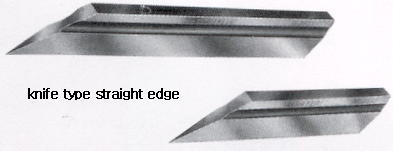
- 1. knife type 직정규(knife type straight edge):
가공된 평면에 대어 광선으로 검사하며 edge 부는 약간 round 되어 있다.
- 2. 삼각형 직정규(triangle type straight edge):
- 3. I-beam 형 직정규(I-beam type straight edge):
- Applicable to check the flatness, parallelism, and straightness.
- Made of finely seasoned carbon tool steel and grinding finished

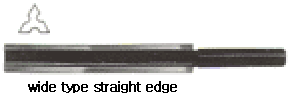
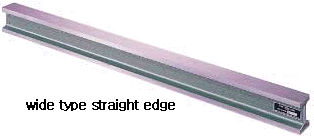
- 4. wide 형 직정규(wide type straight edge):
고정밀 straight edge로서 정밀기계의 조립, 정반 등의 의 평행도 검사에 사용되며 사용면이 넓어 수준기 등을
같이 사용할 수 있다.
- 5. 장방형 직정규(長方形 直定規; rectangular straight edge):
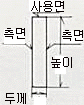 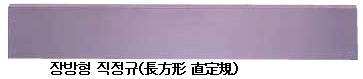
# 장방형(長方形) = 직사각형
- 5. 주철제 직정규(鑄鐵製 直定規; cast iron straight edge):
(5-1) bow shaped(camel back type) cast iron straight edge:
Cast iron straight edges are widely used for setting up and leveling machinery and for checking
and spotting bearing surfaces during hand scraping operations. Properly supported, they may be used
with various indicating devices to check surface flatness of large machined areas like surface tables,
machine tables and bed, machine ways etc.
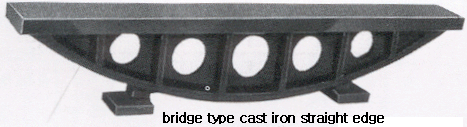
(bow shaped or camel back type cast iron straight edge)
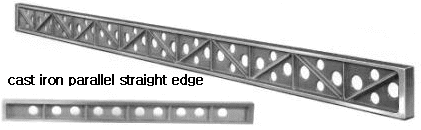
(5-2) cast iron parallel straight edge:
All straight edges feature the strong I-beam design with precision ground or hand scraped finishes
in accuracies within the tolerances.
The overall accuracy of each straight edge is carefully inspected and calibrated to insure it falls
within the tolerance specified
In use, straightness is dependent upon proper support points for straight edges 60" and longer. Use of
these support points minimizes the deflection due to gravity.
To check the accuracy of a properly supported parallel straight edge, indicate one edge or face in the
center; then turn the straight edge over and indicate theopposite edge or face in the some manner.
By measuring the degree of deflection, proper compensation can be made in any alignment application.
To maintain precision tolerances, straight edges must be handled carefully to avoid shock damage.
In storage, they should he stored with full horizontal support.
Where possible, they should be hung vertically with proper safeguards.
|


